Last week in the news, there was a story about a 15-year-old girl who killed herself because a man was harassing her. He would harass her when she was on her way to school or tuition classes, even threatening to beat her brother if she did not give in to his advances. She received no help and the man did not stop. Reaching the limit of her endurance, she took her own life.
At the age of 15, a girl decided that she was not going to get any justice and this man would continue to harass her. With the threats to her brother, she obviously thought it was only going to get worse. Perhaps, she was so sure that society would let her down that she thought her only way out was suicide.
Until a few decades ago, a girl or a woman who was raped was expected to commit suicide while her brother sought vengeance. Perhaps the reason ‘Damini’ was such a powerful film was that the woman who was raped did not kill herself and went through the legal process to seek justice. In the film ‘Wanted’, a bunch of goons walk into a girl’s house and pretend to rape her, their logic being that no one would want to marry her as she had lost her ‘virtue’. Damini was released in 1993 and Wanted in 2009.
Recently, a young girl asked me what she should do if she were raped. She was of the opinion that there was not much because most girls had to kill themselves. The society she lives in does not take kindly to women who did not consider their bodies the base of all virtue. It is not that the victim somehow brings shame on her family by being attacked by someone, she also brings shame to her entire society. As much as we like to think of ourselves as living in a modern society, most Indians still think this way. Parents will still police their daughters, teachers will forbid you from interacting with the other sex, peers will call you a slut if you have male friends and if someone violates your body, well, it was obviously your fault.
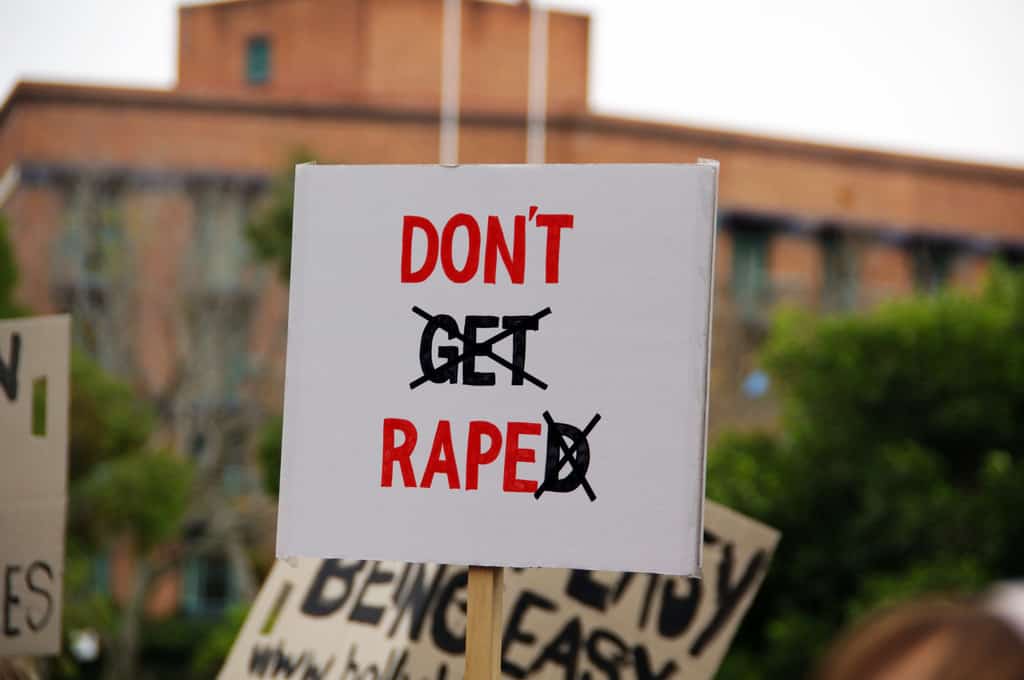
“Zamana kharab hai”. Girls are brought up with these stereotypes. We insist on making our girls careful with the “don’t get raped” philosophy rather than telling our boys not to rape. Even in our own homes, we give the responsibility for the “virtue of the family” to our daughters. We teach our daughters sacrifice and compromise. We teach them that they should be careful of men and careful of being raped.
It is true that men cannot be trusted. They do not consider women or girls human, or perhaps we have underestimated the number of sexual pervasions in our country. Men ruthlessly harass, torment and torture girls and women, even children. It is also true that these men go back to the society that does not punish them, rather it chastises the woman for being the victim. What was she wearing, what was she doing out of the house, why did she make eye contact, why did she dare to be alive? This is the real tragedy.
Conviction rates for rape cases still remain low and only 25% cases lead to an arrest. Power and influence still play a huge role in allowing men to get away with rape. But, after the nationwide reaction to the Nirbhaya incident, we have seen a substantial increase in the number of cases being reported. It is essential that we build upon this hope, and teach our girls that their lives are worth so much more than just their bodies. We have to give them the space to be who they want to be, and we need to teach them that it is never their fault. Society has a long way to go before it starts treating women as equals and starts delivering justice. But today, at least a conversation has started towards accepting that rape is never the victim’s fault.