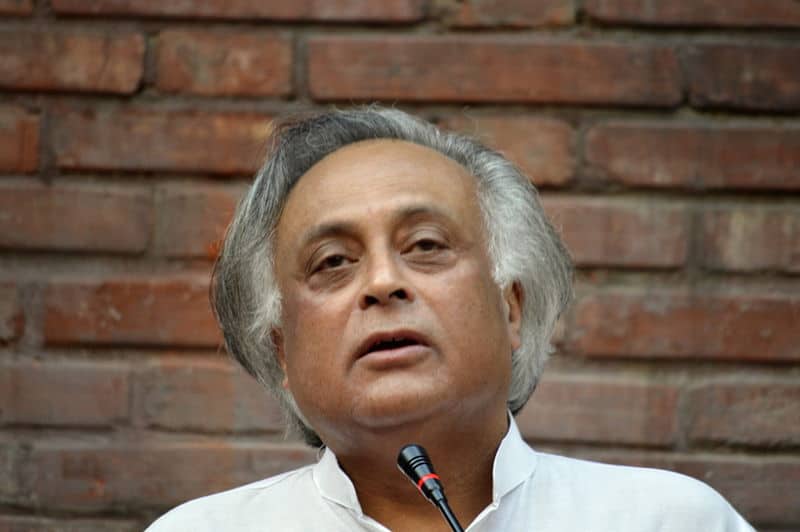
Congress leader and Rajya Sabha Member Jairam Ramesh scorned the Bharatiya Janata Party (BJP) government’s decision to modify the back-series Gross Domestic Product (GDP) data on Saturday, December 1.
Terming the move as “NAMO Effect” — Numbers Adjustment and Manipulation Organisation — Ramesh tweeted, “10 key indicators of the economy have been lower in the Modi years as compared to the preceding 10 years under Dr.(Manmohan) Singh, yet, thanks to NAMO effect, GDP growth rate is higher over the last four years!”
NAMO Effect (Numbers Adjustment & Manipulation Organisation)
10 key indicators of the economy have been lower in the Modi years as compared to the preceding 10 years under Dr.Singh
Yet, thanks to NAMO effect, GDP growth rate is higher over the last 4 years!
1/3
— Jairam Ramesh (@Jairam_Ramesh) December 1, 2018
Ramesh, then, highlighted the key indicators which have reportedly come down in the four years of the BJP rule in the country. These include agricultural growth rate, export growth rate, index of industrial production, capacity utilisation of industry and plant load factor in power pants.
10 key indicators that are ???? in the period 2014-18
1. Agricultural growth rate ????
2. Export growth rate ????
3. Index of Industrial Production ????
4. Capacity Utilisation of Industry ????
5. Plant load factor in power plants ????contd…
2/3
— Jairam Ramesh (@Jairam_Ramesh) December 1, 2018
The other indicators listed by Ramesh include reduction in credit offtake, corporate revenues, investment as share of GDP and job growth. Lastly, Ramesh mentioned that informal sector which accounted for 50 per cent of GDP was “decimated due to demonetisation and Goods and Services Tax (GST).”
6. Credit Offtake ????
7. Corporate Revenues ????
8. Investment as a share of GDP ????
9. Job growth ???? and
10. Informal sector (almost 50% of GDP) decimated due to demonetisation & GST. ????????3/3
— Jairam Ramesh (@Jairam_Ramesh) December 1, 2018
In November, agricultural economist Ashok Gulati claimed that the average agriculture GDP in the four years of BJP government had slipped to around 2.5 per cent from the average of 5.2 per cent during the previous United Progressive Alliance (UPA) government.
Likewise, in November, the Centre for Monitoring Indian Economy (CMIE) reported that unemployment in the country was on a two-year high of 6.9 per cent for the month of October.