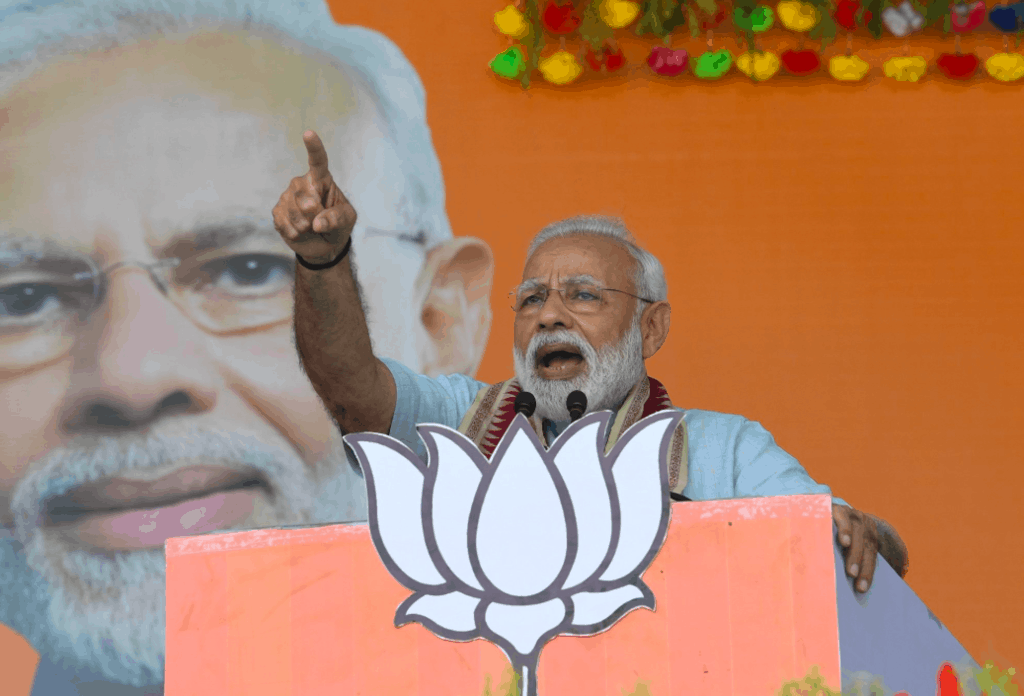
The risks of re-electing Modi as the Prime Minister outweigh the rewards and Indians ‘would be better off with a different leader,’ say the Economist.
A recent editorial by the globally reputable publication criticisms are lobbed directly at Modi and his Bharatiya Janata Party (BJP) government for exacerbating domestic and foreign threats as well as spreading sectarian violence.
Foreign and economic policy
The Economist called the Modi government’s decision to send fighter planes across the Pakistani border ‘as recklessness that could have ended in disaster.’
The publication slammed Modi’s purported tough guy approach as it has heightened tensions in Jammu and Kashmir,“…he (Modi) has inflamed a separatist insurgency rather than quelling it, while at the same time alienating moderate Kashmiris by brutally repressing protests.”
Demonetisation is labeled as a failure and the publication says it caused ‘huge disruption to farmers and small businesses’.
Also Read: ‘Cashless Economy’: Almost 20% More Cash in Circulation Today Than Before Demonetisation
Modi is also criticised for damaging India’s free press by, ‘showering bounty on flatterers while starving, controlling and bullying critics.’
The dismantling and infiltration of government institutions such as the Reserve Bank of India, Income Tax department and educational institutions are also mentioned in the article.
Hate, fear and communalism uncaged
Modi’s biggest fault, The Economist says, is ‘his relentless stoking of Hindu-Muslim tensions.’
The publication highlights Modi’s own silence and non-apology for failing to prevent 1,000 deaths, during the Gujarat riots while he was the chief minister, “The closest he has come has been to express the sort of regret you might feel “if a puppy comes under the wheel” of a car.”
Modi is held personally responsible for tapping Yogi Adityanath described as “a fiery Hindu cleric who paints the election campaign as a battle between the two faiths,” for the chief ministerial role in Uttar Pradesh.
The editorial also points out Amit Shah’s xenophobic and hate-fuelled ‘termites’ comment for migrants.
Calling this attitude of silently inculcating violent Hindutva as ‘despicable’ as well as ‘dangerous’, The Economist says “India is too combustible a place to be put into the hands of politicians who campaign with flamethrowers.”
The publication highlights the rising lynching incidents by cow vigilantes and nationalist mobs attacking Kashmiris, to point out how 175 million Indians feel like second-class citizens.
Looking to the future
Near the end of the article The Economist hails the Congress’ manifesto as ‘impressive’ for trying to help the poorest Indians and credits the Congress President Rahul Gandhi for modernising the party, adding, “It (Congress) is a worthier recipient of Indians’ votes than the BJP.”
The publication also speaks about the alternative. If the BJP still cobbles together more seats than its Opposition, The Economist says, “… it would be preferable if it (BJP) were forced to govern in coalition.”