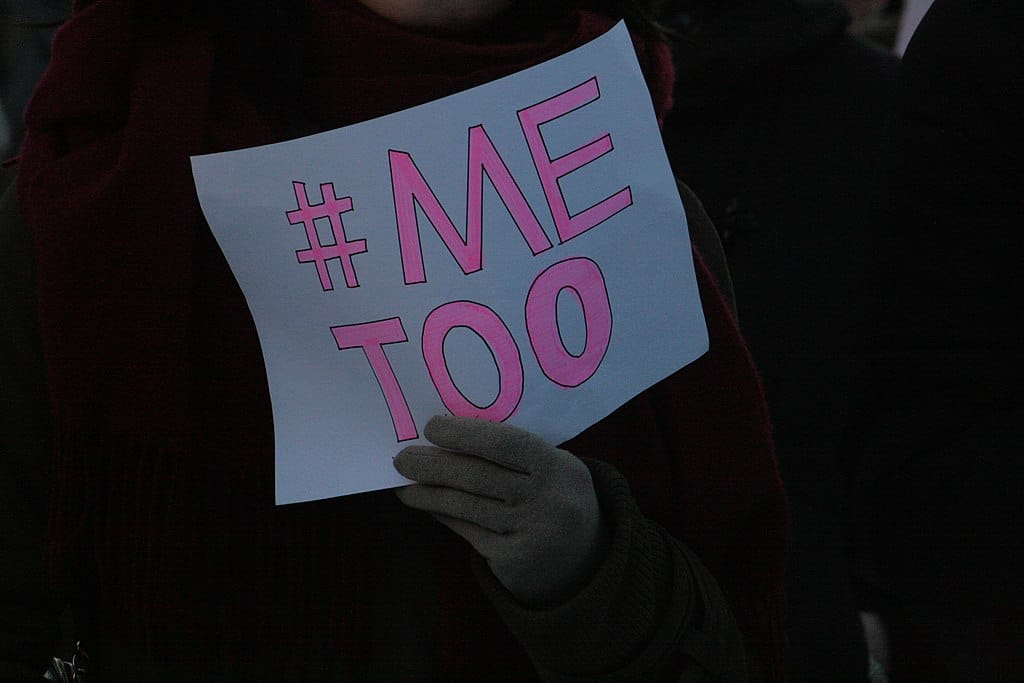
A flirtatious remark can be flattering – a pleasant reminder of ones femininity. But at what point does it become unwanted sexual innuendo? And when does that cross the line into abusive harassment? Today we are divided into a few who think ME TOO has gone too far, and those who feel it hasn’t gone far enough. That it is not just about physical sexual assaults; we need to call out men and the casual entitlement with which they make free with the women with whom they share work spaces, class rooms, public transport. Even the homes they supposedly cohabit.
I come from a generation of women who took wolf whistles, a pat on the bum, a drunken grab by a friend’s husband at a party, a roadside loiterer rubbing his private parts suggestively as one passed, as par for the course. An occupational hazard of being female. When I went to Japan aged 17 after university life in India, I found it almost unnerving that one could walk the streets of Tokyo without attracting raunchy remarks – I remember jokingly telling my mother that I suddenly felt invisible.
Growing up with three brothers in a family where women were unquestioningly given equal status, I was confident in myself and not too bothered by these weird displays of male libido. l found them tiresome rather than threatening. I became expert at the withering glare, the cutting remark, the smack on the arm, calculated to make the offender feel foolish instead of randy. I swatted away verbal passes as if they were tiresome mosquitoes, and sped away on my little motorbike to avoid unwanted lifts after parties, meanwhile ignoring snide suggestions that I rejected such advances because I was a closet gay! A rape attempt shock me badly, but later reinforced the feeling that if one kept ones nerve and self respect all could be well. It was only much much later that I realised how much male entitlement went into this behaviour, how much it reflected a shockingly retrograde view of women: as fair game, passive almost complicit victims, somehow inferior and at men’s disposal.
ME TOO is a powerful tool, a coming together of women too long in the shadows. Reading the stories is gut-wrenchingly sad; idealistic young people in their first forays in the workplace experiencing this kind of exploitation, others subjected to systemic abuse, too scared to speak out for fear of losing their livelihoods or homes. These predators have been prowling the corridors of power for decades unchallenged.
But there are also stories that sit awkwardly among these searing accounts. Do Chetan Bhagat’s foolish Whatsapp messages really amount to sexual harassment, or merely prove that his ‘wooing” is as badly written and banal as his novels? His attempts at apology and self justification are equally puerile but not criminal. And I found the complaint (written by someone whose employment in the office she names is now under question) indicting a senior colleague for supposedly licking his lower lip on seeing a stray bra strap comic rather than threatening. Why was she watching his lower lip anyway? Such accusations belittle and blur the real offences.
In the 60s my generation of women thought being liberated meant cheerfully disregarding the liberties men took; today we know it means having the courage to bring them to book. However, ME TOO must be used sensitively and with thought. Its important not to trivialise it or use it to pay off petty scores. Also to remember that there are loveable, caring men out there and life is greatly enhanced by their affection, companionship and mutual regard. To look at every man as a threatening adversary and make them collateral damage in this campaign, is as simplistic as thinking that wolves cannot lurk under cuddly sheep’s clothing.
Read original post here