In the next two years, the Indian Air Force will reportedly be short of 16 squadrons of fighter aircrafts, even if the scheduled supplies of Rafale and HAL-built Light Combat Aircraft Tejas are received on time. The IAF will be left with 26 squadrons as opposed to the authorised 42.
A report in the Indian Express, based on official documents, states that “while the IAF currently has 30 fighter squadrons, the number will slip to 26 in 2021 and 2022.” By then, only one squadron of Rafale would have been inducted in addition to one of LCA Tejas, and six squadrons of Soviet-era MIG aircraft will be decommissioned by the time.
IE also reported that around the same time Pakistan will have 25 fighter squadrons and China will have the capacity to bear 42 squadrons against India, as opposed to India’s 26.
By 2027, it is expected India will have 30 squadrons with the induction of 4 LCA Tejas. However, IE notes, “The contract for these 83 LCA Tejas Mark1A is yet to be signed between the IAF and HAL.”
In 2002, India reportedly had full 42 fighter squadrons. After the Kargil war, IAF had noted the need to induct seven squadrons of a Medium Multi Role Combat Aircraft (MMRCA).
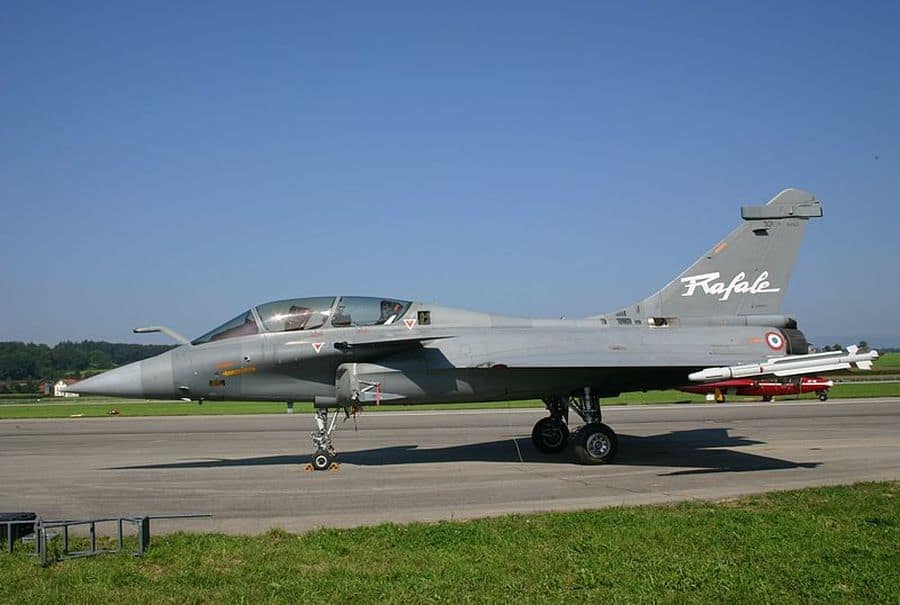
In 2007, a tender for the seven MMRCA squadrons was floated by the UPA government pursuant to which, Rafale was selected. After the negotiations were on for three years, the contract was scrapped in 2015 by the Narendra Modi-led Bharatiya Janata Party (BJP) government and a new deal for only 36 Rafale aircraft was concluded. The new deal is now embroiled in major controversy. Besides other alleged irregularities, the opposition parties claim that the Modi govt’s decision to buy 36 aircraft instead of 126 has compromised national security.
N. Ram’s report in The Hindu which details how the Modi government’s decision to by only 36 aircraft resulted in a price hike of 41.1% per aircraft, notes, “the design and development cost shot up from 11.11 million euros per aircraft in the original Dassault bid in 20117 to 36.11 million euros when the deal of 35 flyaway Rafale aircraft was struck in 2019. The effect of this was the increase in the overall price of the Rafale jet from 90.41 million euros in 2007 to 127.86 million euros in the 2016 deal.”
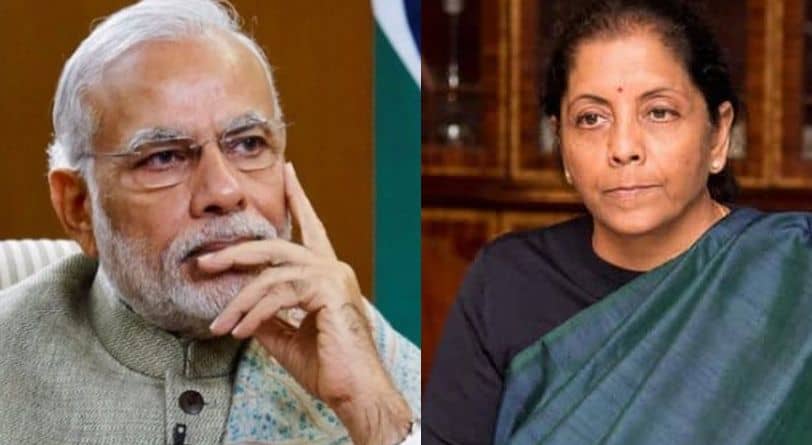
Defence Minister Nirmala Sitharaman has not explained the government’s reasoning behind buying 36 Rafale aircraft instead of 126, despite the question being raised several times by Congress president Rahul Gandhi as well as the media.
In August 2018, the 29th report of the Murli Manohar Joshi-headed Parliamentary Committee On Estimates on Preparedness Of Armed Forces-Defence Production & Procurement had said that the Narendra Modi government had brought down defence preparedness to an all-time low. “In the current geo-political scenario, a country of the size of India cannot afford complacency when it is a question of defence preparedness even for a two-front war while retaining its dominance in the Indian Ocean. The Committee, therefore, strongly emphasize that allocation of adequate financial resources for defence preparedness both for the current needs and expansion & modernization plans should be accorded highest priority to enable the services to meet the challenges concerning safety and security of the country,” the report had said.
Additionally, as reported by PTI, in March 2016, IAF vice-chief Air Marshal BS Dhanoa had admitted that the IAF did not have sufficient number of warplanes to fight a two-front war. “Our numbers are not adequate to fully execute an air campaign in a two-front scenario,” he had said, noting that the IAF at the time had 33 squadrons as compared to the required 42. “Probability of a two front scenario is an appreciation which you need to do. But are the numbers adequate? No. The squadrons are winding down.”
The number has now come down to 30 and will be 26 by 2021-22 as per the recent IE report.