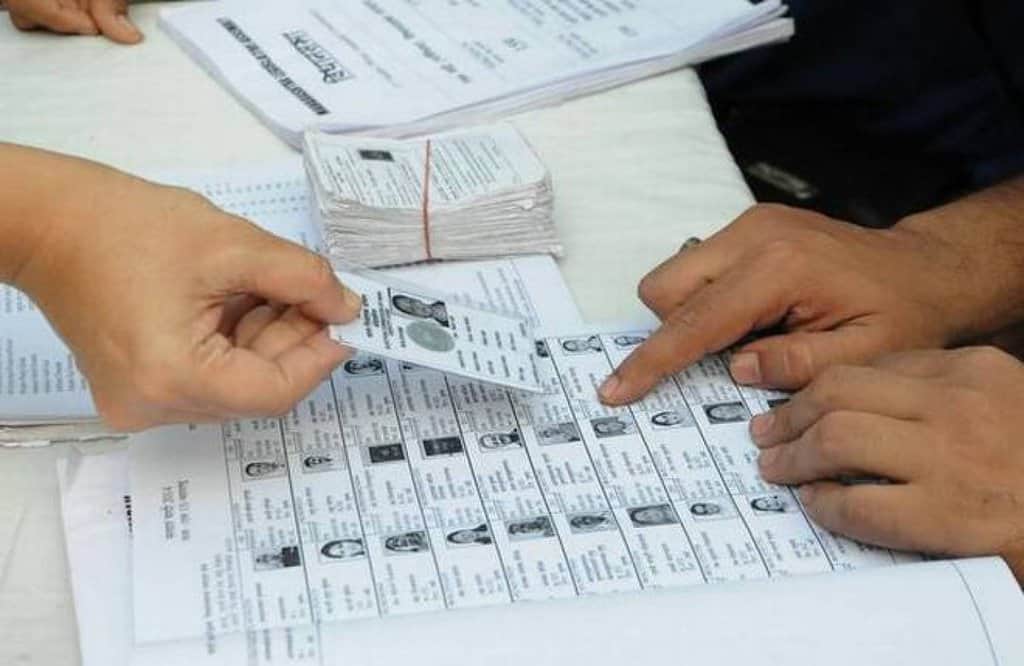
Merapani, Golaghat: On a hot summer day in August 2017, Abdul Gafur, a 43-year-old tailor, was arrested by the Assam Police from his shop in Merapani. Gaufur’s citizenship was doubted by the Assam Border Police in 2007, and he was marked a ‘D’ voter – where ‘D’ stands for ‘doubtful’ or ‘dubious’ voter.
The six-year-long Assam Movement ended with the signing of the Assam Accord, which fixed March 25, 1971, as the cut-off date for granting citizenship to Bangladeshi migrants in Assam. The Election Commission of India, in 1997, launched a scrutiny of voters’ list to segregate citizens from non-citizens in Assam. The letter ‘D’ was marked against those whose documents of citizenship were inadequate at the time of verification by specially-appointed officers. The ‘D’ could be removed if the Foreigners Tribunal held such people as Indian citizens after a full-fledged trial. The Election Commission sends such ‘D’ voter cases to the Superintendent of Police (Border) of respective districts, who refer the cases to the Foreigners Tribunal for its opinion on the status of citizenship of the accused.
Random picks by Border Police?
“Prior to his arrest, we didn’t know about the ‘D’ marked against his name on the voter list. We then came to know that the court has given an ex-parte judgement on a case registered against him by the Foreigners Tribunal in 2011,” said Akeeb (akeeb-7086128210 ), Gafur’s son. According to his family, Gafur was originally an Adivasi who converted to Islam in 1988. “He is still known as Binod (Karmakar) – his original name. But we don’t have any written proof,” Akeeb explained. This raises serious questions on the investigations by the Assam Border Police, whose job is to survey areas under its jurisdiction and identify ‘illegal Bangladeshis’. It is alleged that often, the Border Police, randomly pick names of people from the voters’ list and mark them as ‘illegal immigrants’.
Most of these people are poor and illiterate, and so easily cheated by lawyers. In many cases, lawyers take huge amounts of money and don’t work as expected. They end up losing all their money, and many step out even before the trial begins.
Asiya Begum’s case is similar, her family alleges that she was arrested without prior notice. Asiya, who is now detained in Jorhat Central Jail, has been fighting her case ever since she was marked ‘D’ in 2007. “Since 2011, we have been waiting to receive any kind of notice. We once went to Johrat to find out about her case, but they sent us back by saying they will send us notice when required. But without any notice, the police came at midnight and took her to detention camp one day,” Asiya’s brother was quoted as saying at his residence in Islampur, Merapani.
On July 18, 2017, Asiya was arrested. Since Asiya’s father, late Fazlur Rahman, was on the voter list of 1966, so there is little doubt about her Indian citizenship. Although they had submitted all documents, including voter list of 1966 and a certificate from the village head (gaonburha) that confirms that she is the daughter of Fazlur Rahman and was staying with her parents until her marriage, her lawyer said that her case is still in court. It is now her ninth month in detention.
Aman Wadud, a senior advocate of the Guwahati High Court, said over email that till December 2016, a total of 26,026 cases were decided ex-parte. “Most people who are sent notices are poor and illiterate. In some cases, even if they receive it, they don’t appear before the tribunal due to lack of awareness. There are cases where people appeared, and then stopped because they are too poor to bear the expenses of a lawyer,” he said.
According to the Border Police, 93,399 people have been declared as foreigners since 1985. Out of the 93,399, more than 26,000 cases were ex-parte. “People who are being declared as ‘foreigners’ by the Tribunal are not necessarily so. The Tribunal declares people as ‘foreigners’ on hyper-technical grounds, such as minor anomalies in documents, which could be spelling mistakes in the names of the voter list or a mismatch in age. In many cases, the lawyers fail to present the case in an appropriate manner, which costs the citizenships of litigants. Therefore, very often, only one person from the family is a ‘foreigner’, and the rest are Indian citizens,” Wadud added.
This is exactly what happened with Sultan Ali from Gomariguri village, Merapani. In some record, his father’s name is spelt ‘Amiratddin’, whereas his actual name is ‘Amiruddin’. Thus, a reference was registered against him at the Foreigners Tribunal in Golaghat on March 18, 2010. This reference was decided ex-parte on June 16, 2012. According to Sultan, he was not aware of this when the Border Police arrested him in August 2015. “My forefathers have been living here for decades. Even my father’s name is on the voter list of 1970, so tell me how I a foreigner?” he asked. It was only after verification of documents and evidence that proves his father’s Indian citizenship, that the court declared Sultan as an Indian citizen.
3.5 lakh people declared ‘D’
Ex-parte judgements are common because those served notice either do not receive it at all or go missing once they do. On April 4, 2004, the Guwahati High Court ordered ‘D’ voters to be sent to detention camps till their cases were cleared. In February this year, the Assam Government said in the assembly that there are 899 declared foreigners in six detention camps in Jorhat, Tezpur, Goalpara, Dibrugarh, and Kokhrajar. These make-shift camps are functioning inside jail premises’.
Around 3.5 lakh people are framed as ‘doubtful’ voters by the Election Commission of India. There are 100 Foreigner Tribunal officers in the state that handle these cases. There are allegations that the EC doesn’t conduct mandatory door-to-door surveys. According to Wadud, in several cases, because of a dispute or rivalry between two private parties, one party bribes the Border Police to frame the other as ‘illegal immigrants’.
There is a visible fear among people since most don’t keep their documents properly due to lack of awareness or loss during natural disasters. “People look us with suspicion because our males wear a ‘lungi’ and our language is different. No one cares about our miseries,” said a litigant under anonymity, who lost all her documents in a fire at her home long ago. She never bothered filing for them again, and now, the police are looking for her.
The Supreme Court of India declared the illegal migration determination by Tribunal Act, 1983, as ultra vires in 2005, and repealed it. All the cases pending before the tribunals under the IM(DT) Act, 1983, were transferred to the tribunals constituted under the Foreigners (Tribunal) Order, 1964, where the burden of proof is on the accused.
The question of ‘illegal Bangladeshi’ is a sensitive issue in Assam. Because of the continued identity politics in the state, poor and illiterate Indian citizens are being harassed. The White Paper Foreigner’s issue suggests that out 45,456 disposed cases of ‘D’ voters, only 12,913 cases are declared as foreigners – meaning three-fourth of these cases are of genuine Indian citizens. Many politically-influenced forces are also trying to reduce this issue of ‘D’ voters to a communal one, which will lead to nothing but more victimisation of minorities. The state is going through the process of updating its National Register of Citizenship (NRC) currently, which government will publish on June 30 this year. The fate of these ‘D’ voters is hanging in the balance since the names of ‘doubtful’ voters and their children will not feature on the NRC. This might also lead to communal tension in the state.
***
(Pratyush Deep is a Jorhat-based freelance writer and a member of 101Reporters.com, a pan-India network of grassroots reporters.)