Tamradhwaj Sahu, the Member of Parliament from Durg, has emerged as a surprise face for the Congress in the assembly elections in Chhattisgarh. In the 2013 assembly elections, he had lost from the Bemetara assembly seat to BJP’s Awadhesh Chandel. What contributed to Sahu’s defeat was Chief Minister Raman Singh’s decision to create a new Bemetara district out of Durg a year earlier.
However, Sahu didn’t have to wait long for this big moment. A year later, he won from the Durg Lok Sabha seat, defeating BJP Mahila Morcha chief Saroj Pandey. The victory was an important one as it was the only seat the Congress won out of the 13 Lok Sabha constituencies in Chhattisgarh. He became the only one among eight Congress MPs in Chhattisgarh to have withstood the Narendra Modi wave in Hindi speaking states. More significant was the fact that he had won from a seat the BJP had been winning for the past five elections. The last time Congress won from Durg was in 1991.
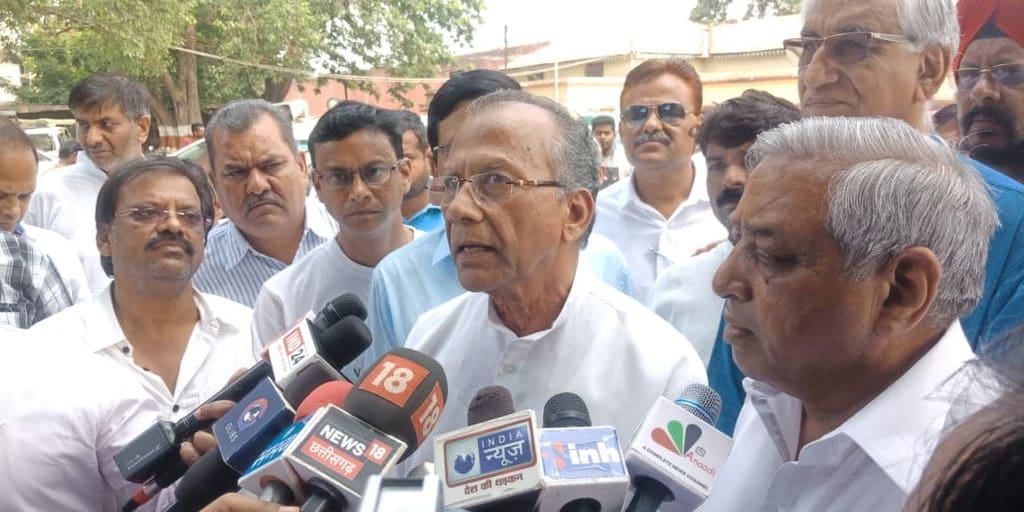
Durg district has now emerged as the epicentre of the Congress’ “social engineering” efforts in Chhattisgarh. The party has fielded Sahu from the Durg Gramin seat, even though he is an MP. This is a seat that the Congress lost by a narrow margin of 3000 votes in the last elections. The Congress hopes that Sahu’s presence could help it wrest the seat from the BJP. Bhupesh Baghel, president of the Chhattisgarh Pradesh Congress Committee, is contesting from his seat Patan which is also in Durg district.
The party is projecting Sahu and Baghel as its faces in the Chhattisgarh election, in what is being seen as an attempt to woo Other Backward Classes (OBCs) who account for 40–50 per cent of the state’s population. While Sahu belongs to the Sahu or Teli community, Baghel is a Kurmi, the largest peasant community in the state. Kurmis and Sahus are the most numerous among the OBC communities and, according to estimates, constitute 20 per cent and 16 per cent of the state’s population respectively. Since many OBCs, particularly Kurmis, are engaged in agriculture, they are acutely affected by the agrarian distress in Chhattisgarh. Low Minimum Support Prices and the ineffective implantation of the Fasal Bima Yojana are key issues afflicting the state’s farmers. In his rallies, Congress president Rahul Gandhi has said that if the Congress comes to power in Chhattisgarh, it will raise the MSP for paddy to Rs 2500 per quintal. At present, farmers reportedly get about Rs 1700-1900, even though they are supposed to get Rs 2100 per quintal.
Mobilising Chhattisgarh’s backward communities is not just electorally important. It is integral to the identity of Chhattisgarh. The Chhattisgarhi political identity got consolidated in the 1980s and 1990s as a result of the Congress’ efforts to mobilise backward groups. Scheduled Tribes, Scheduled Castes and OBCs respectively account for 32 per cent, 13 per cent and 40–50% of the state’s population, that is, over 90 per cent of the total population.
In the early 1980s, when Chhattisgarh was part of Madhya Pradesh, the then Congress chief minister Arjun Singh promoted the Chhattisgarhi identity and supported leaders from the region belonging to SC, ST and OBC communities in order to counter his rivals in state politics – Vidya Charan Shukla and Shyama Charan Shukla, who hailed from the region. One such leader he identified was a tribal civil servant with over 15 years of experience, who had come into prominence as the collector of Raipur – Ajit Kumar Jogi. Jogi went on to become the state’s first chief minister and remained a steadfast opponent of the Shuklas for decades to come, even defeating VC Shukla in Mahasamund in the 2004 Lok Sabha elections.
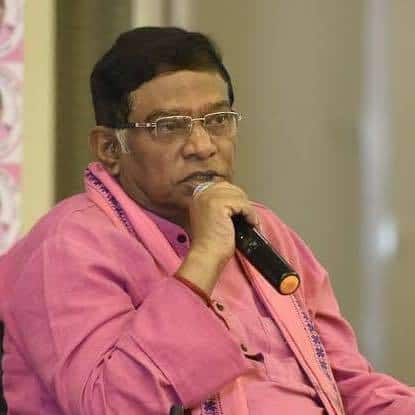
But promoting leaders was only one part of the story. Arjun Singh also constituted the Mahajan Commission to conduct a survey of OBCs in Madhya Pradesh, a step which led to the mobilisation of backward castes in the state’s politics. This forced both the Congress and BJP to concede space to backward caste and tribal leaders. So while leaders like Ajit Jogi and Nandkumar Patel, a Kurmi, emerged in the Congress, the BJP saw the rise of Kurmi leader Ramesh Bais.
Arjun Singh’s government introduced cooperatives for the collection of Tendu leaves, a major source of livelihood for many tribals in Chhattisgarh. This eliminated middlemen, mostly Banias, BJP’s core support base. When BJP came to power in 1990, it withdrew this decision. But the Congress started an agitation against it with the slogan “Tendu tode aadhe pet, munafa khaye Lakhi seth” (We pluck Tendu leaves on a half-empty stomach but the profits are eaten up by Lakhi Seth). Lakhi Seth refers to BJP leader Lakhiram Agrawal, a Bania, and the political mentor of current chief minister Raman Singh.
When Chhattisgarh was formed in 2000, Congress chose Ajit Jogi as chief minister, over VC Shukla. However, during Jogi’s tenure, BJP wooed OBCs by sending the message that the Congress government is dominated by SCs and STs. It also started a whisper campaign among tribals that Jogi isn’t a tribal in the first place but from the SC Satnami community. It took a court verdict years later to confirm Ajit Jogi’s status as a tribal belonging to the Kanwar Adivasi community.
Now the Congress has gone back to Arjun Singh’s formula of mobilising backward communities. The BJP is being projected as anti-tribal and anti-farmer, not very different from how the party galvanised Adivasis on the Tendu collection issue in the early 1990s.
However, the Ajit Jogi-led alliance, which includes the Bahujan Same Party and the Communist Party of India, threatens to eat into the Congress’ vote share. According to reports, this might happen most acutely in the case of the Satnami community, which has tended to support Ajit Jogi. The Congress has deployed Satnami Dharam Guru Bal Das to counter Jogi and woo the Satnami community. Bal Das had earlier floated a small outfit, which put up candidates who ate into Congress votes, allegedly at the BJP’s behest. He has since shifted to the Congress.
It remains to be seen whether the Congress succeeds in mobilising backward communities and overthrowing Raman Singh or whether the BJP leader holds ground, becoming the first chief minister in the Hindi heartland to win four consecutive terms.