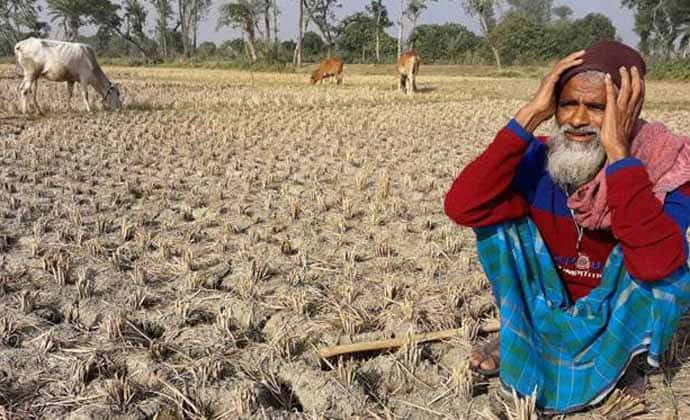
The agriculture ministry’s report submitted to the Parliamentary Standing Committee on Finance on Tuesday, November 20, revealed that “millions of farmers” were not able to buy seeds and fertilisers for their winter sowing due to demonetisation.
According to the ministry’s findings, since the farmers were either in the process of selling their Kharif crops or were sowing their Rabi crops, demonetisation endeavour wiped off huge chunks of cash from the market, reported The Hindu. “India’s 263 million farmers live mostly in the cash economy. Millions of farmers were unable to get enough cash to buy seeds and fertilisers for their winter crops. Even bigger landlords faced a problem such as paying daily wages to the farmers and purchasing agriculture needs for growing crops,” said the ministry in its report.
Also Read: Demonetisation Destroyed 3.5 Million Jobs, Labour Force & Women Worst Affected: CMIE Chief
The report also mentioned that the National Seeds Corporation (NSC) was unable to sell around 1.38 lakh quintals of wheat seeds. Despite the government allowing the use of old denomination notes of Rs. 500 and Rs 1000 for wheat seeds’ sales later, the sales could not pick up.
Opposition’s Attack
Opposition parties reportedly asked tough questions during the Parliamentary Standing Committee meeting. Trinamool Congress (TMC) leader Dinesh Trivedi reportedly queried as to whether the government knew that the Centre for Monitoring Indian Economy (CMIE), in its report, had stated that around 1.5 million jobs were lost post-demonetisation, between January-April 2017.
Incidentally, the agriculture ministry’s report on the adverse effects of demonetisation in the farming sector coincided with the Prime Minister Narendra Modi saying that the objective of demonetisation was to give “proper treatment to deep-rooted corruption system”, while addressing rallies in Jhabua, in Madhya Pradesh, on the same date.
Also Read: Demonetisation After-effects: Unemployment Rises to Two-year High, Labour Participation Rate Falls