At a time when people’s faith in the Indian media is at an all-time low, Reporters Without Borders and DataLEADS have launched The Media Ownership Monitor (MOM) — an extensive, openly accessible database that tracks ownership of media houses in India.
Noting that concentration of media ownership in a few hands is a threat to media pluralism, the database aims to bring much-needed transparency by: “informing about the owner of the most important media outlets of the different types of media (television, radio, online, and print) and their affiliations; analyzing the potential influence on the public opinion-forming process based on audience concentration; and shedding light on the regulation of media ownership and concentration, as well as the implementation of regulatory safeguards.”
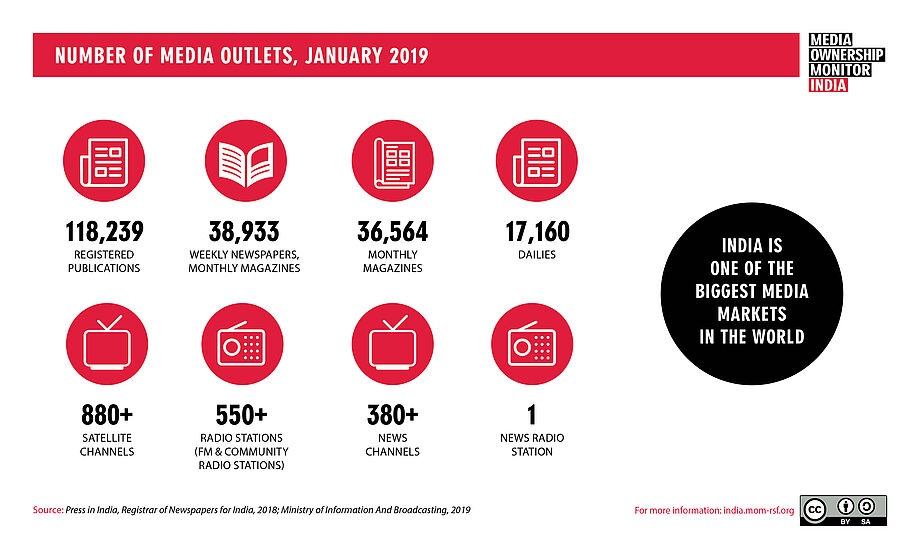
In India, there are over 38,933 weekly newspapers/monthly magazines; 17,160 dailies; over 380+ news channels.
However, the database, as of now, has evaluated 58 media outlets — 25 print media, 23 TV outlets, nine online and one radio station. The ownership of these wrests in 39 companies and 45 individual owners. These were selected by taking into consideration several factors. E.g., The TV outlets were shortlisted based on Broadcast Audience Research Council India website listing weekly viewership for the week 4 of 2019 for the news genre across 10 languages (Hindi, English, Marathi, Telugu, Bangla, Kannada, Oriya, Assamese, Malayalam, Tamil), and BARC’s weekly impressions were monitored for 3 months to arrive at the sample size. You can read the selection criteria here.
Also Read: RTI, News, Social Media, Cinema: How Narendra Modi Controls The ‘Narrative’ In India
“Within the sample of this study, as many as ten media owners have direct or indirect links with politics while some of them even represent a political party. There are countless others, however, who have refused to declare their political affiliations, but yet own media companies. Between them, media owners with political links control a sizeable share of viewership/readership,” says a key finding of the database. You can read the detailed findings on the political control of Indian media houses here.
Here are some biggest players and the ownership structures of prominent media houses:
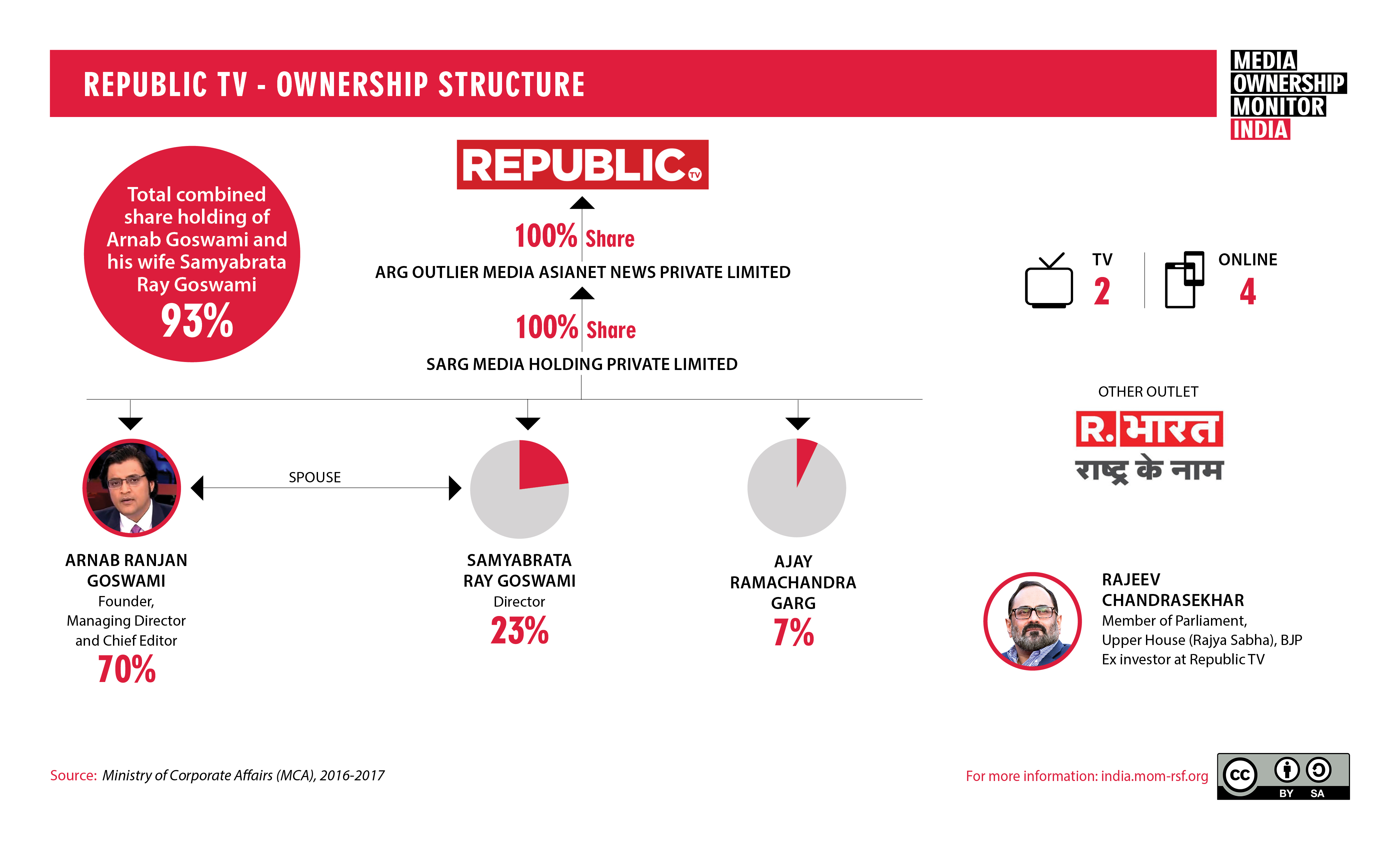
Republic TV
Reliance Group

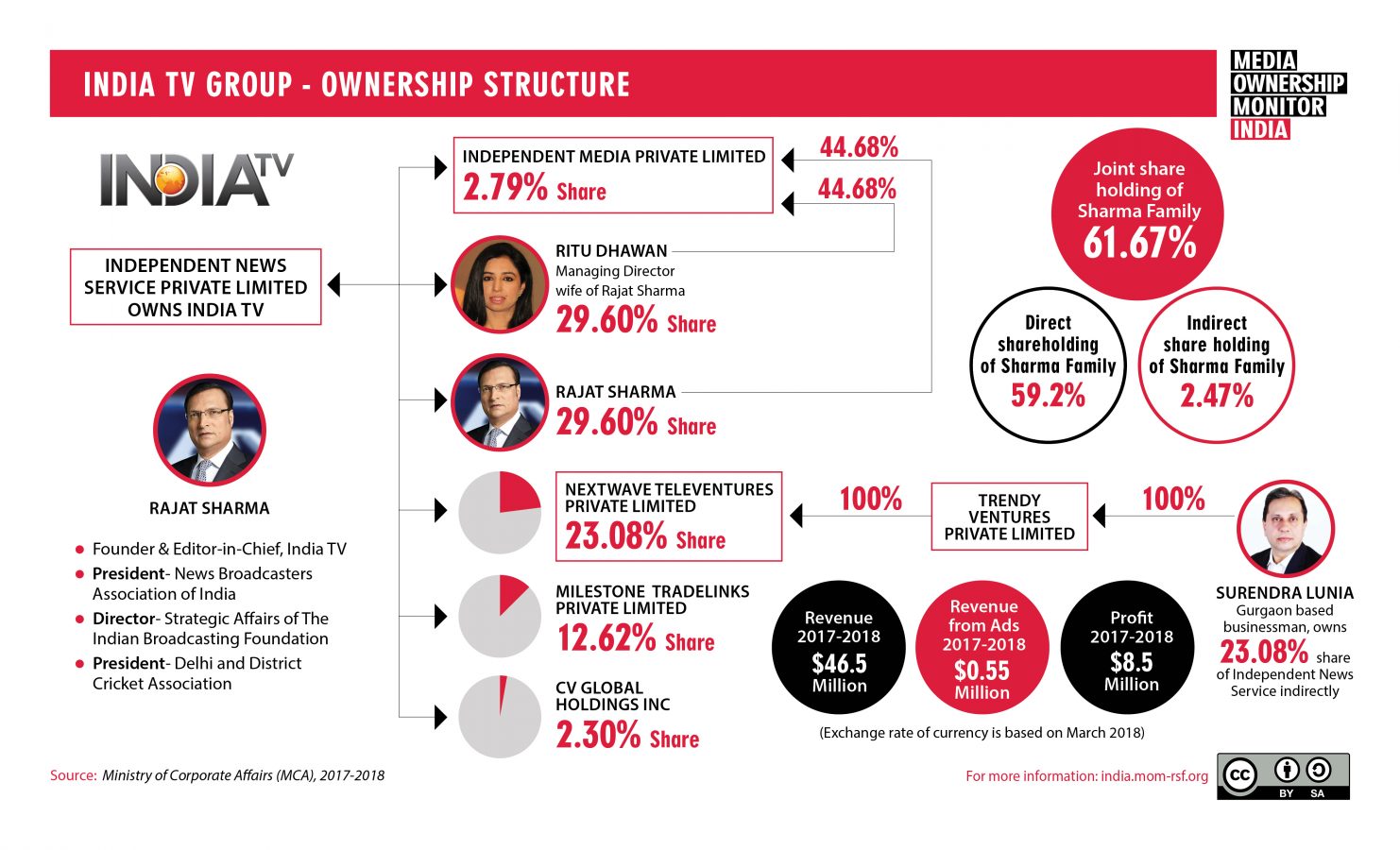
India TV Group
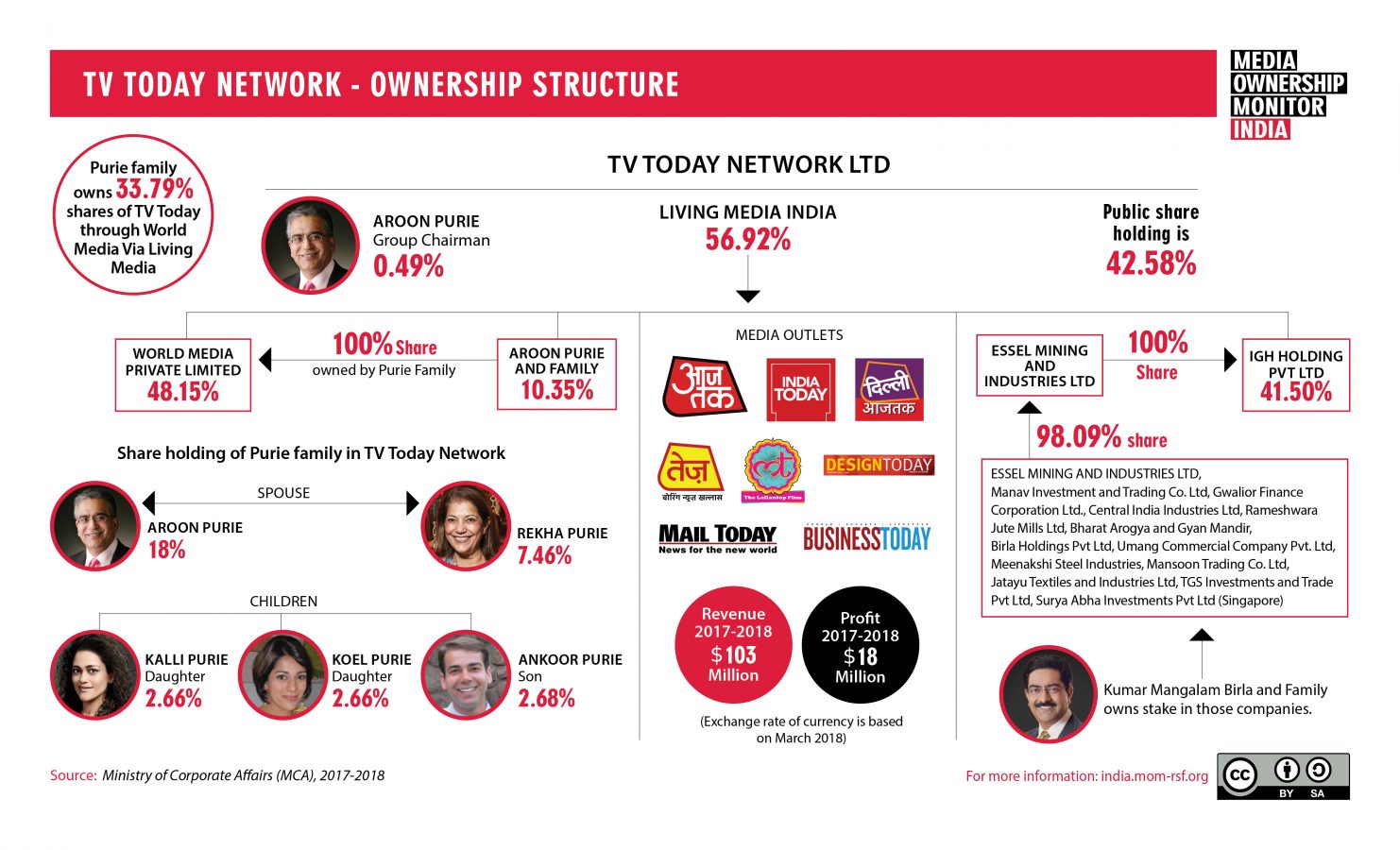
TV Today (Aaj Tak, India Today etc.)
DB Corp (Dainik Bhaskar)

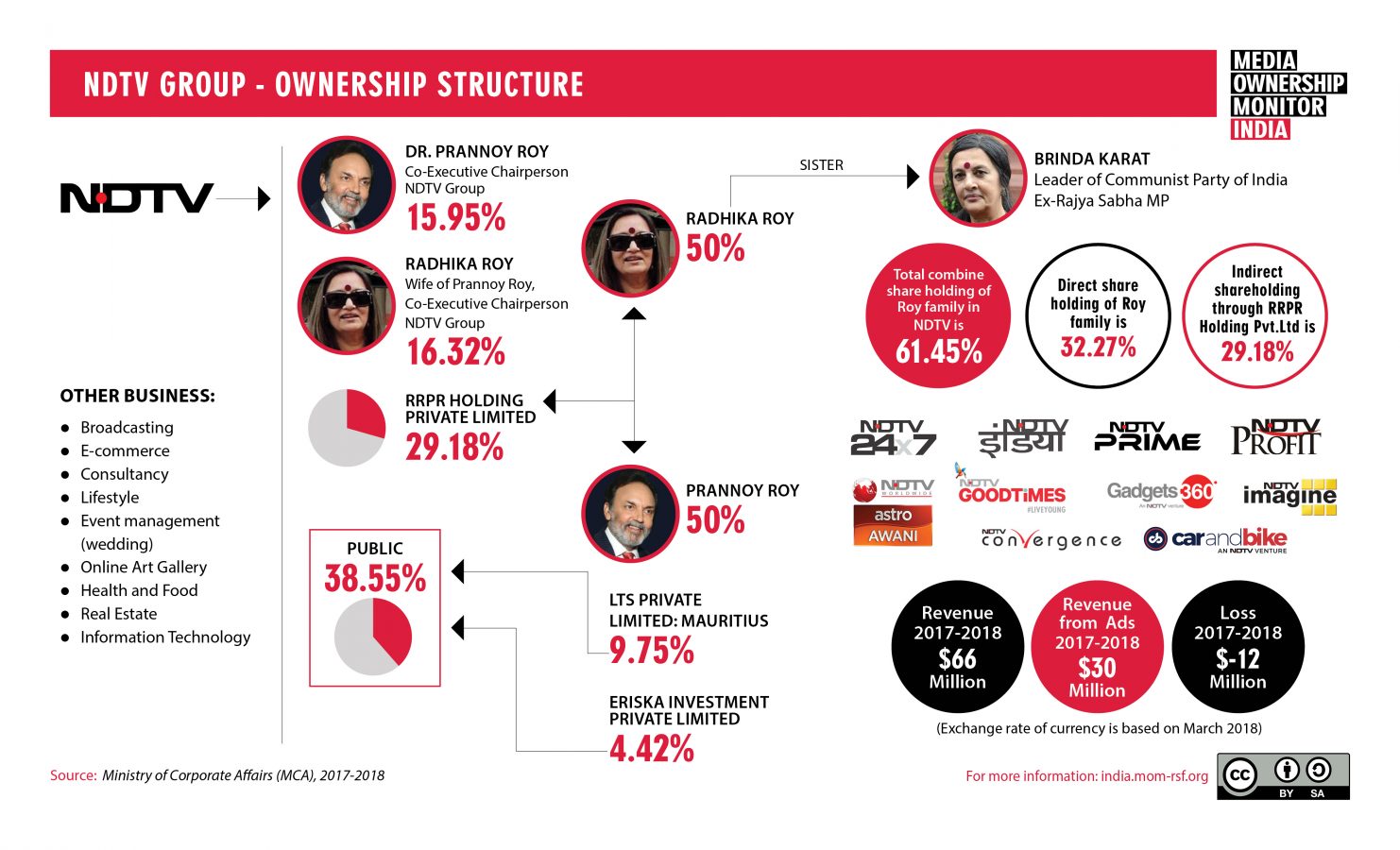
NDTV
HT Media

The Times Group:

Besides ownership, another form of control on media houses is advertisement. The Indian government reportedly spends as much as Rs 21.34 million for Hindi and Rs 14.09 million for English print advertising “A transparent and independent coverage of content gets compromised a great deal by way of such ‘soft pressure’. Often, there is an invisible pressure, for a newspaper, or a television channel to articulate the point of view of the government in a contentious issue.”
The database has also created indicators such as— Media Audience Concentration, Media Market Concentration, Regulatory Safeguards: Media Ownership Concentration, Cross Media Ownership Concentration, (Political) Control Over Media Funding— which give a brief overview of the risks to media pluralism. India’s performance on these indicators shows that media pluralism in the country is indeed under significant threat.
All infographics are courtesy of Media Ownership Monitor and have been republished under the Creative Commons license.