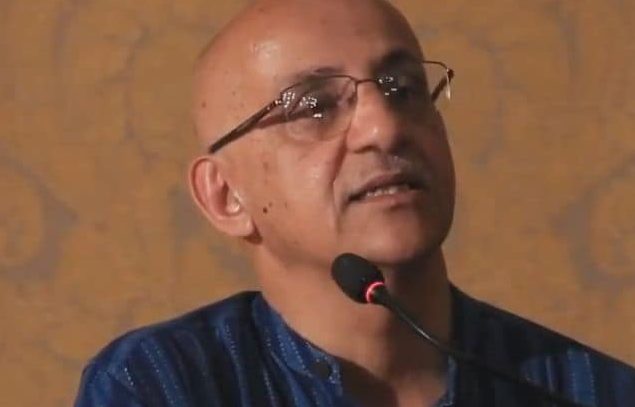
“The particular battle that we are fighting for today is a battle some of us call the Idea of India itself. Where it would not matter which god you worship or what language you speak — there’s no conditionality to belong and to belong equally.”
As part of the Karwan-e-Mohabbat — a civil society initiative for peace and justice led by of activists, writers and journalists — video series “Tathya”, public intellectual and Director of the Centre for Equity Studies, Harsh Mander speaks about the what the “Idea of India” is.
Mander talks about the Rashtriya Swayamsevak Sangh and the Hindu Mahasabha and how, “While much of India fought from freedom from the British, they fought for this alternate idea of India — an India of militant Hindu supremacist nationalism.”
In the India of 2019, after almost five years of the Narendra Modi-led Bharatiya Janata Party regime, the idea of what India is continues to be a contentious question. In the face of majoritarian Hindutva, the minorities — Dalits, Muslims, Christians etc. — continue to face oppression. And often, this oppression is normalised.
Mander reminds that while India witnessed one partition in 1947, “where the country was torn apart amidst a river of blood,” he states that we know are observing and living a “new partition” — one of hearts and minds.
Drawing comparisons with the Nazi Germany, Mander says: “My German friends tell me repeatedly, every generation is asking the earlier generation, ‘How did you let that happen? How did you let the Holocaust happen?'”
The people of Germany allowed hatred to be fostered to levels that finally culminated in the Holocaust, he notes, adding, “In India, we are passing through a similar moment. And each of us needs to be conscious of this moment; of our responsibility at this moment. Because later generations are going to ask you and they are going to ask me: ‘What did you do at this time?'”