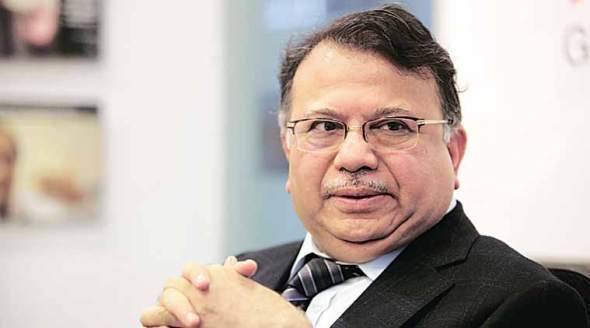
In his opening address at the launch of veteran journalist Sagarika Ghose’s book, Why am I a liberal, former Chief Justice of Delhi and Madras High Courts, Ajit Prakash Shah voiced the need to ensure and maintain “individual freedom” in India at this moment.
Here are some powerful quotes from his address:
- Persons with a liberal bent of mind, who prize individual freedoms like free speech, gender and racial equality, are especially troubled, for our country appears to be at a juncture where fundamental notions of modern India are under existential threat
- Unfortunately, those of us who value religious freedom have been disillusioned by multiple governments once too often. The current BJP-led government has no pretensions about its dislike for the secular idea. Even those governments that proudly flaunt the label of “secularism” have subjected us to their non-secular realpolitik.
- The Constitution contains all the declarations essential to a nation that preserves individual liberties. It is for us to protect it from neglect and disrepair.
- Fascist politicians use propaganda, for example, about anti-corruption campaigns, even when they are transparently corrupt.
- Another aspect is anti-intellectualism, for the “enemy of fascism is equality,” and the target of such anti-intellectual campaigns are places of learning, like universities. How can the educated elite know anything about anything, the fascist believes.
- most tellingly, fascist politicians promise a law and order regime designed not to seek out offenders, but to criminalise outliers, who are usually ethnic, religious or sexual minorities….there is some resonance closer to home.
- Today, we live in an India where we are told what we can and cannot eat, what we can and cannot watch, what we can and cannot speak about, and who we can or cannot marry.
- Sloganeering and flag raising have become tests for nationalism. Journalists are shot dead at point blank range for the views they hold and propagate. Not long ago, the police arrested five political activists essentially for thought crimes and taking up the cause of the tribals.
- The past record of the judiciary in testing times is not very encouraging if we think of the Emergency. New allegations that the former Chief Justice of India (CJI) was perhaps being “remote controlled” do not invite much confidence either.
- Our present CJI, before taking office, publicly lectured about independent judges and noisy journalists. Just recently, the judicial system allowed a journalist in Odisha to remain in jail for over a month for making certain remarks about the Sun Temple in Konark. Our Supreme Court even refused to grant him bail, reportedly remarking that if one’s life were in danger, what better place was there than to stay in jail.
- When the court is angered about the publication of information pertaining to the working of critical public institutions like the Central Bureau of Investigation on grounds of confidentiality, one cannot help but worry.
- Ultimately, it is the people who will protect the Constitution, and all of the wisdom it contains about personal liberties and individual freedoms.
- Prof Stanley phrases this appropriately when he says, “The ordinary citizen [must] stand up and loudly confront people who engage in… fascist rhetoric and not be afraid. Those millions of acts of individual bravery, if we can stitch together, will save us.” This is a time for individual acts of bravery. These are what will save us from a dangerous future.